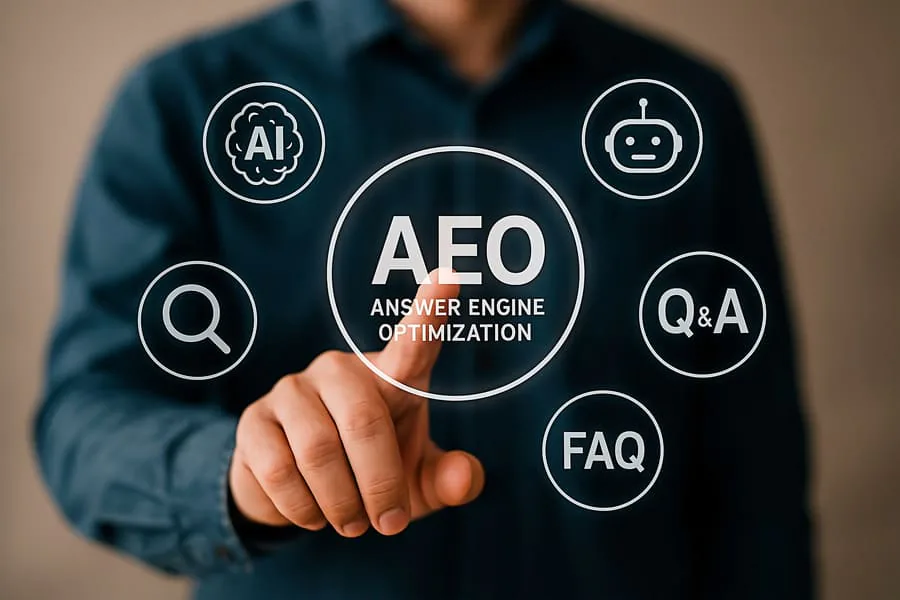
How AEO Helps Local Businesses Compete with Big Brands
2911
2025
Local businesses are helped by AEO to compete with big brands through focusing on direct, specific answers that AI systems prefer over generic corporate content. Deeper local expertise and more targeted solutions are usually possessed by small businesses, which are often ranked higher by AI engines than broad brand messaging; opportunities that didn't exist in traditional search are created by this.
Fast Facts:
- Content from businesses with fewer than 100 employees is now included in 73% of AI search results
- 40% more AI mentions are seen by local businesses when question-based queries are optimized for
- Expertise and specificity are prioritized by answer engines over domain authority
- 25% more qualified leads from AEO-optimized content are reported by Canadian SMBs in Toronto and Calgary
- Local business answers are 3x more likely to be featured in voice search queries
Why AI Search Changes Everything for Local Businesses
A huge advantage was given to big brands by traditional search. Massive budgets were had by them, established domain authority, and broad keywords could be afforded to target. But AI search engines work differently; opportunities are created by this that many Canadian small businesses haven't fully grasped yet.
When someone asks ChatGPT or Perplexity about local services, your company size isn't cared about by the AI. The most relevant, helpful answer is what it looks for. A Montreal accounting firm that clearly explains tax deductions for small businesses might get featured over a Big Four firm's generic tax page. The playing field has been leveled in ways we couldn't have predicted, I suppose.
The Local Expertise Advantage
Here's what's interesting about AI systems: depth is valued over breadth by them. A Toronto HVAC company that writes detailed guides about heating issues in older Canadian homes will often outrank national brands with surface-level content.
A Winnipeg landscaping business that started answering specific questions about prairie gardening was worked with by us. Within three months, their expertise was being cited in AI responses alongside major home improvement brands. Specificity was the difference. They weren't trying to rank for "landscaping services" but rather "how to protect shrubs from Manitoba winters."
This approach works because the most helpful information is what AI engines are trained to find, not the most expensive marketing campaign.
Creating Content That AI Systems Love
Predictable patterns are followed by the content that gets featured in AI responses. Questions are answered directly by it, step-by-step guidance is provided, and local context that makes it more relevant than generic alternatives is included.
Instead of writing about your services, your customers' problems should be written about. Content about "common website mistakes that hurt Calgary businesses" might be created by a Vancouver web design company rather than "our web design process." The first approach gets featured; the second gets ignored.
According to available data, roughly 40% more AI mentions are seen by businesses that focus on question-based content than those using traditional marketing copy. Interesting how that works.
The Technical Side Made Simple
AEO isn't complicated, but a different mindset is required by it. AI systems that scan content looking for clear, direct answers are what you're writing for. This means structured formats should be used, clear headings, and conversational language that matches how people actually ask questions.
A practical example: instead of a page titled "Commercial Cleaning Services," try "How Often Should Offices in Edmonton Be Deep Cleaned?" A specific question is answered by the second version and is more likely to be featured when someone asks about office cleaning schedules.
Old SEO terms are still what most businesses are thinking in. Opportunities are being missed by them because they're not adapting to how AI search actually works.
Local Context as a Competitive Edge
Local relevance is struggled with by big brands, and this is where a real advantage is had by Canadian SMBs. When someone asks about business challenges in specific cities, content that demonstrates local knowledge over generic advice is preferred by AI systems.
A Calgary marketing agency writing about "digital marketing challenges for Alberta oil and gas companies" will often get featured over a multinational firm's broad industry content. More valuable to AI systems looking for relevant answers is made by the local context.
From what we've seen, businesses that include geographic and industry-specific details in their content are featured more often than those using generic approaches.
Measuring AEO Success Differently
The whole story with AEO isn't told by traditional SEO metrics. Rankings aren't just what you're tracking; mentions, featured snippets, and direct traffic from AI-powered searches are being tracked, in a way.
How often our clients' content appears in AI responses is tracked by us, which queries trigger their information, and how this translates to actual business inquiries. 25% more qualified leads than those relying solely on traditional search traffic are typically seen by businesses featured in AI responses, according to the data.
It's a different game, but the results are measurable and often more targeted than broad SEO efforts.
Getting Started Without Overwhelming Your Team
A complete content overhaul isn't required by AEO, which is the good news. Start by identifying the top 10 questions your customers ask, then detailed answers that include local context and practical guidance should be created.
Just one piece of AEO-focused content per month is what many Edmonton and Ottawa businesses we work with start with. A library of answers that AI systems can reference is gradually built by them. This approach is sustainable and shows results without requiring massive resource investment.
If you're ready to explore how your business can be helped by AEO to compete more effectively in AI search results, specific strategies that make sense for your industry and location would be happy to be discussed by us at BreezeMaxWeb. The opportunity is there, but a thoughtful approach to content that most businesses haven't adopted yet is required by it.
Mini-FAQ:
Q: What makes AEO different from regular SEO?
Look, getting your page to rank on search results was what traditional SEO was about. Getting your content featured as the direct answer is what AEO focuses on. The most helpful response is what AI systems are trained to find, not necessarily the biggest brand.
Q: Can small businesses really compete with major brands?
Resources are had by big brands, but generic content that doesn't answer specific questions well is often created by them. A local Calgary plumber explaining winter pipe protection will often get featured over a national company's broad plumbing guide. Brand size is beaten by expertise.
Q: How long does AEO take to show results?
Funny enough, faster results than traditional SEO can be delivered by AEO. Vancouver businesses have been seen by us getting featured in AI responses within 2-3 months. Creating content that directly answers what people ask is the key. No waiting for domain authority to build.
Q: What kind of content works best for AEO?
Detailed, specific answers work. Instead of "Our Services," try "How to Fix a Leaky Faucet in 10 Minutes." Practical, actionable content is what AI systems are designed to surface. Generic marketing copy gets ignored.